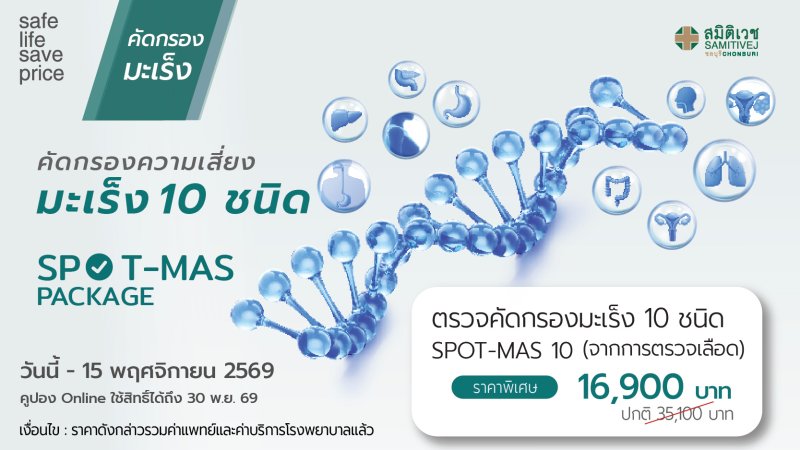
SPOT-MAS 10: Blood-Based Screening for 10 Types of Cancer
16,900 THB / set
Normal Price 35,100 THB
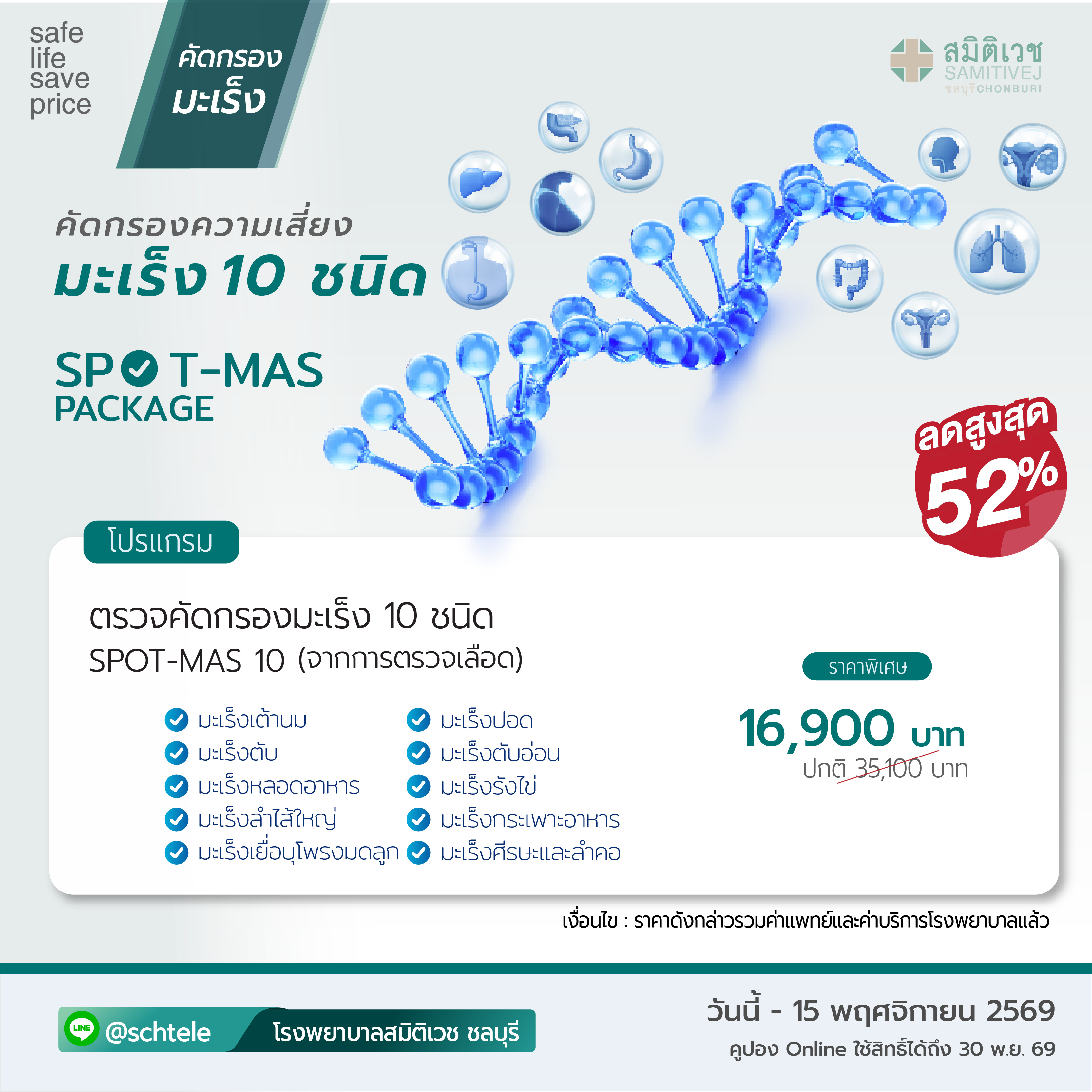
SPOT-MAS 10: Blood-Based Screening for 10 Types of Cancer
Early awareness starts with cancer screening. Discover potential cancer signals through a blood-based SPOT-MAS test.
SPOT-MAS 10 is a blood-based cancer screening program designed to detect signals that may be associated with cancer by analyzing genetic material found in the bloodstream. The test can screen for signals associated with 10 types of cancer and may provide additional information to support individual health risk assessment and appropriate follow-up.
Cancer screening is an important part of preventive healthcare, particularly for individuals who want a more comprehensive health assessment or have risk factors associated with cancer.
What Is SPOT-MAS?
SPOT-MAS is an advanced blood-based cancer screening technology that analyzes cell-free DNA (cfDNA) circulating in the bloodstream.
Some cancer cells may release DNA into the blood. SPOT-MAS analyzes specific patterns and changes in this DNA that may be associated with cancer and uses the findings to assess potential cancer signals.
As the test requires only a blood sample, it offers a convenient option for screening multiple cancer types as part of a comprehensive health assessment.
Which 10 Types of Cancer Can Be Screened?
The SPOT-MAS 10 program screens for signals associated with the following 10 cancer types:
- Liver Cancer
- Lung Cancer
- Colorectal Cancer
- Stomach Cancer
- Esophageal Cancer
- Pancreatic Cancer
- Breast Cancer
- Ovarian Cancer
- Head and Neck Cancer
- Biliary Tract Cancer
The cancer types included and testing details may vary depending on the specific test kit and laboratory specifications.
How Does the SPOT-MAS Test Work?
The test requires a blood sample and generally involves the following steps:
1. Blood Collection
A healthcare professional collects a blood sample according to standard clinical procedures.
2. Genetic Analysis
The sample is analyzed for cell-free DNA (cfDNA) and specific genetic patterns that may be associated with cancer.
3. Cancer Signal Assessment
Advanced analytical methods are used to assess whether signals associated with cancer are detected and, where applicable, to estimate the potential cancer type within the scope of the test.
4. Results Interpretation
The results are reported and interpreted together with the individual's medical history, symptoms, risk factors, and other clinical information.
Who May Benefit from Cancer Screening?
Blood-based cancer screening may be considered for individuals who:
- Want to take a proactive approach to their health
- Wish to assess their potential cancer risk
- Have a family history of cancer
- Have lifestyle or other risk factors associated with cancer
- Want additional health information to support preventive healthcare planning
- Have been advised by a healthcare professional to undergo additional cancer screening
A consultation with a doctor is recommended to determine whether the test is appropriate for you, particularly if you have symptoms or a previous history of cancer.
What Can the SPOT-MAS Result Tell You?
Depending on the test methodology, results may indicate either “No Cancer Signal Detected” or “Cancer Signal Detected.”
If a cancer-associated signal is detected, this does not mean that cancer is definitely present. Your doctor may recommend additional diagnostic tests, such as imaging, endoscopy, or other investigations, to identify the source of the signal and confirm a diagnosis.
Likewise, a result indicating no cancer signal detected does not guarantee that cancer is absent. All screening tests have limitations and may not detect every cancer or every stage of cancer.
Why Is Cancer Screening Important?
Some cancers may develop without noticeable symptoms, particularly in the early stages. Screening can help identify potential abnormalities or cancer-associated signals before symptoms appear, allowing healthcare professionals to determine whether further evaluation is needed.
SPOT-MAS provides an additional blood-based screening option for multiple cancer types and may be used as part of a comprehensive preventive healthcare strategy alongside standard cancer screening recommended according to age, sex, and individual risk factors.
HIGHLIGHTS
- Blood-based screening for 10 types of cancer
- Uses SPOT-MAS technology to analyze genetic signals in the bloodstream
- Helps assess potential signals associated with cancer within the scope of the test
- Convenient blood-based approach for multi-cancer screening
- Results should be interpreted by a healthcare professional together with individual health information
Important Information Before Testing
SPOT-MAS is a screening test, not a diagnostic test for cancer. A positive or negative screening result cannot confirm or completely rule out cancer.
If a cancer-associated signal is detected, your doctor may recommend additional diagnostic investigations to determine the cause and confirm whether cancer is present.
Even when no cancer signal is detected, individuals should continue recommended standard cancer screening appropriate for their age, sex, and personal risk factors, such as screening for breast, cervical, and colorectal cancer.
Taking proactive steps toward your health starts with understanding your risks. Appropriate cancer screening can be an important part of preventive healthcare and early health assessment.