How Serious Does Snoring Have to Be Before You Should See a Doctor?
(Ear Nose and Throat Center) article author : Chernkwan Titirungruang, M.D. 2026-05-26 11:29:00
HIGHLIGHTS : When Should Snoring Be Checked by a Doctor?
-
Loud snoring does not always mean it is harmless. It may be a sign of Obstructive Sleep Apnea (OSA).
-
If snoring suddenly becomes silent, as if breathing stops during sleep, a sleep test is strongly recommended.
-
OSA reduces oxygen levels in the body and increases the risk of heart disease, stroke, high blood pressure, and daytime fatigue.
-
Waking up feeling unrested, morning headaches, dry mouth, excessive daytime sleepiness, and poor concentration may be warning signs of sleep apnea.
-
Frequently waking up at night, choking sensations, or gasping for air during sleep should not be ignored.
-
People who snore and are overweight, have a large neck circumference, are over 50 years old, or have high blood pressure are at higher risk for OSA.
-
The STOPBANG questionnaire is a simple screening tool. A score of 3 or more suggests a higher risk and the need for further evaluation.
-
A sleep study (Sleep Test) is the most accurate way to diagnose sleep apnea.
-
Home sleep testing may be convenient and faster for some patients, but it may not be suitable for individuals with certain underlying medical conditions.
-
Untreated sleep apnea can negatively affect long-term health, daily performance, and overall quality of life.
How Serious Does Snoring Have to Be Before You Should See a Doctor?
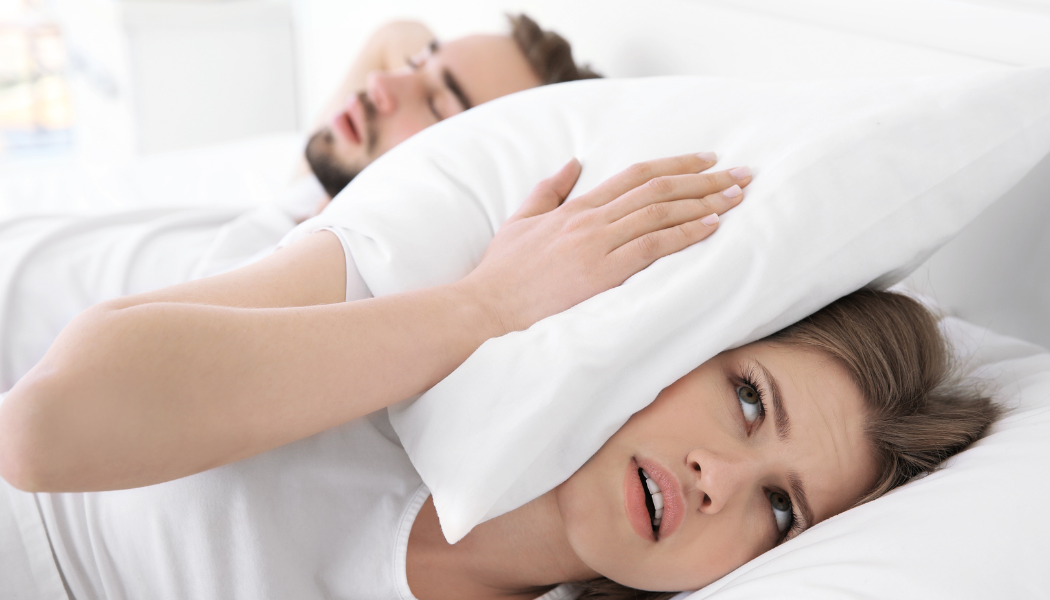
Have you ever experienced situations like these?
“My child had to wake me up because my snoring was too loud and they couldn’t sleep.”
“My husband was snoring, then suddenly became silent and stopped breathing for almost a minute. Is something wrong with him?”
“I was about to fall asleep and suddenly felt like something was stuck in my throat. I kept waking up startled all night and never felt fully rested… but my wife says she never heard me snore because she slept soundly.”
These are some of the common stories patients tell doctors. Although the symptoms may appear different, all three patients were eventually diagnosed through a sleep study with:
Obstructive Sleep Apnea (OSA)
OSA is a condition in which the upper airway becomes narrowed or blocked during sleep, preventing enough air from reaching the lungs. Unlike ordinary snoring, OSA can reduce oxygen levels in the body and may increase the risk of heart disease, stroke, memory problems, daytime fatigue, and reduced work performance if left untreated.
Is Loud Snoring Dangerous?
Loud snoring alone may not always be dangerous if OSA is not present. However, it can disturb the sleep quality of people sharing the same room.
Snoring is caused by vibration of tissues in the upper airway, such as enlarged tonsils, an elongated uvula, or a large tongue base. A doctor can examine which structures are causing the blockage and may recommend medication or corrective surgery to improve airflow and sleep quality.
What Kind of Snoring Could Be OSA?
A simple way to assess your risk is the STOPBANG questionnaire. If you meet 3 or more criteria, you may be at risk for OSA and should consider a sleep study.
-
S – Snoring: Loud snoring during sleep
-
T – Tired: Daytime fatigue or sleepiness
-
O – Observed apnea: Someone notices you stop breathing during sleep
-
P – Pressure: High blood pressure
-
B – BMI: Body Mass Index over 35 kg/m²
-
A – Age: Over 50 years old
-
N – Neck circumference: More than 40 cm
-
G – Gender: Male
What If I’m Not Sure Whether I Have OSA?
Many patients are unaware that they stop breathing during sleep. Other symptoms that may suggest OSA include:
-
Waking up suddenly during the night
-
Choking or gasping sensations while falling asleep
-
Frequent nighttime urination
-
Morning headaches
-
Dry mouth upon waking
-
Feeling unrested despite sleeping
-
Poor concentration, forgetfulness, irritability
-
Chronic acid reflux that does not improve with treatment
Even if your STOPBANG score is low, you should still see a doctor if you experience these symptoms. An examination can help determine whether your airway is narrowed and whether additional sleep testing is needed.
Which Sleep Test Is Best?
In-Lab Sleep Study (Type 1 Polysomnography)
This is the gold standard sleep test performed overnight in a hospital with continuous monitoring by trained staff.
Advantages
-
Most accurate and detailed
-
Can immediately trial CPAP therapy if apnea is detected
-
Can diagnose other sleep disorders besides OSA
Disadvantages
-
Requires an overnight hospital stay
-
Multiple sensors and wires attached to the body
-
Results usually take 5–7 days
Home Sleep Test
There are many home testing devices available today, but their accuracy varies. Devices such as WatchPAT can detect whether a patient is asleep or awake and have an accuracy rate of up to 89% compared with Type 1 sleep studies.
Advantages
-
Convenient and more affordable
-
Fewer wires and sensors
-
Results available within 1 day
Disadvantages
-
Cannot perform CPAP pressure titration
-
Cannot diagnose other sleep disorders besides OSA
-
If results are unclear, an in-lab sleep study may still be necessary














 Hospital Articles