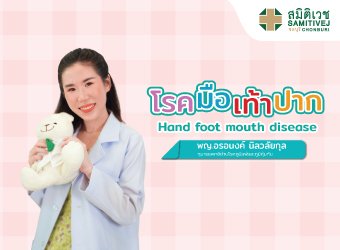
Hand, Foot and Mouth Disease (HFMD) in Children
(Pediatrics Center) article author : Pucharawan Chuenrattanawong, M.D. 2026-07-08 13:57:00
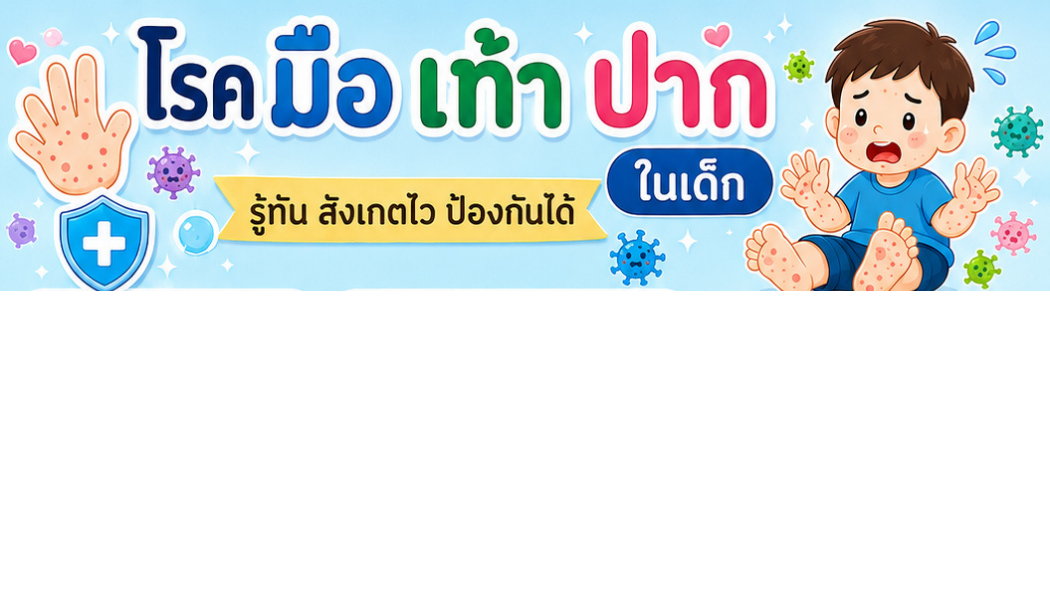
HIGHLIGHTS :
What Is Hand, Foot and Mouth Disease (HFMD)?
Hand, Foot and Mouth Disease (HFMD) is a common viral infection that mainly affects young children, especially those under 5 years of age. It spreads easily through saliva, nasal secretions, stool, and contact with contaminated objects or surfaces.
Symptoms of Hand, Foot and Mouth Disease Parents Should Know
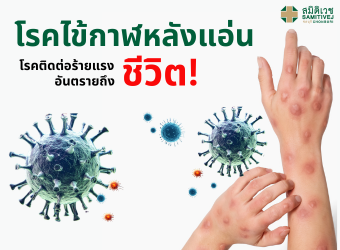
Children with HFMD commonly develop fever, painful mouth sores, and reduced appetite due to mouth pain. A red rash or small blisters typically appear on the hands and feet, and may also be found on the buttocks, knees, or elbows.
How to Care for a Child with HFMD
Encourage your child to drink plenty of fluids to prevent dehydration. Offer soft, cool foods, ensure adequate rest, and use fever-reducing medication as recommended by a healthcare provider. Keep your child home from school or daycare until they have recovered to help prevent spreading the infection.
How to Prevent Hand, Foot and Mouth Disease
Wash hands frequently with soap and water, avoid sharing cups, utensils, towels, or other personal items, and regularly clean toys and frequently touched surfaces. Children who are sick should stay home to reduce the risk of transmission.
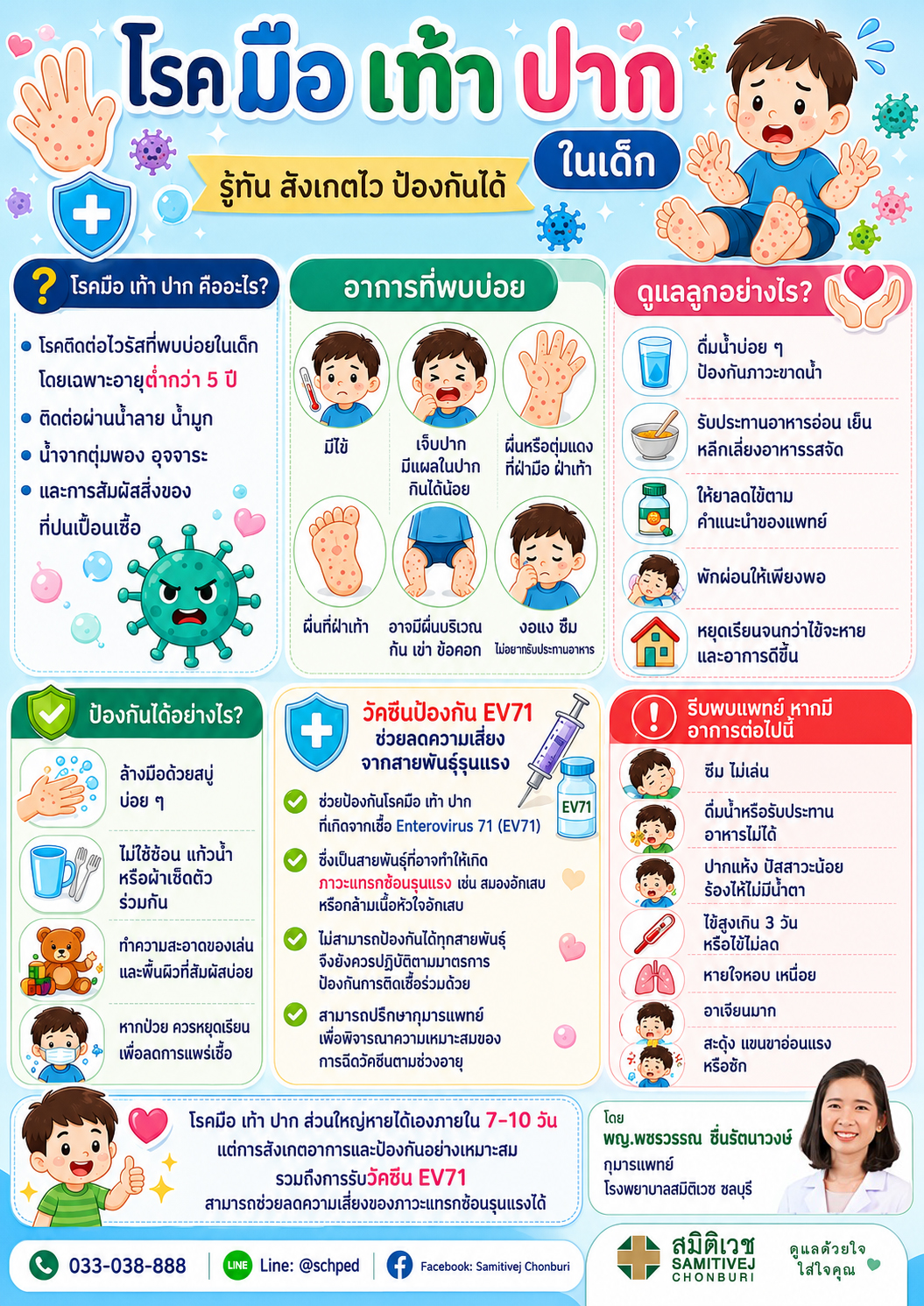
Hand, Foot and Mouth Disease (HFMD) in Children
Know the Signs • Early Detection • Better Prevention
What is HFMD?
Hand, Foot and Mouth Disease (HFMD) is a common viral infection, especially among children under 5 years of age.
- Spread through saliva
- Nasal mucus
- Fluid from blisters
- Stool (feces)
- Contact with contaminated objects or surfaces
Common Symptoms
- Fever
- Painful mouth sores with difficulty eating
- Red spots or blisters on the palms and soles
- Rash may appear on the buttocks, knees, or elbows
- Irritability, drowsiness, and poor appetite
How to Care for Your Child
- Encourage frequent fluid intake to prevent dehydration.
- Offer soft, cool foods and avoid spicy or acidic foods.
- Give fever-reducing medicine as prescribed by your physician.
- Ensure your child gets plenty of rest.
- Keep your child at home until symptoms have completely improved.
How to Prevent HFMD
- Wash hands frequently with soap and water.
- Do not share utensils, drinking cups, or towels.
- Clean toys and frequently touched surfaces regularly.
- Keep infected children away from school or daycare until fully recovered.
EV71 Vaccine
Helps Reduce the Risk of Severe Disease
- Provides protection against HFMD caused by Enterovirus 71 (EV71).
- Reduces the risk of severe complications such as encephalitis and myocarditis.
- Does not protect against every strain of HFMD; preventive hygiene remains essential.
- Consult your pediatrician to determine whether vaccination is appropriate for your child.
Seek Medical Attention Immediately If Your Child Has:
- Extreme drowsiness or lethargy
- Unable to drink fluids or eat
- Dry mouth, decreased urination, or crying without tears
- High fever lasting more than 3 days or fever that does not improve
- Difficulty breathing or rapid breathing
- Persistent vomiting
- Weakness of the arms or legs, startling movements, or seizures





































 Hospital Articles