RSV ในเด็ก คืออะไร? รู้ทันอาการ เสี่ยงปอดอักเสบ ป้องกันได้
(Obstetrics & Gynecology Center) article author : Wankwan Ak-kayakul, M.D. 2026-05-20 17:09:00
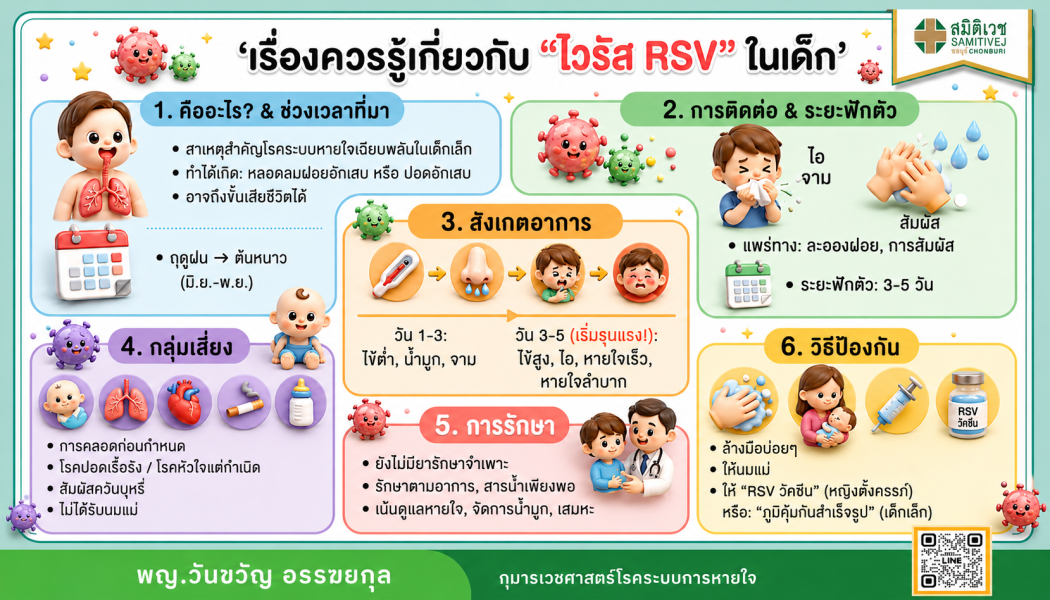
RSV in Children: Symptoms, Prevention & When to See a Doctor
RSV (Respiratory Syncytial Virus) is a common respiratory virus in infants and young children that can cause severe complications such as bronchiolitis and pneumonia, especially in children under 5 years old.
Common RSV Symptoms in Children
-
Runny nose
-
Mild to high fever
-
Coughing
-
Sneezing
-
Wheezing
-
Rapid breathing
-
Difficulty breathing
-
Poor feeding or lethargy
How RSV Spreads
RSV spreads through respiratory droplets from coughing or sneezing, direct contact, and contaminated surfaces. The incubation period is typically 3–5 days.
Children at Higher Risk
-
Premature babies
-
Infants under 1 year old
-
Children with heart or lung disease
-
Children exposed to cigarette smoke
-
Children with weak immune systems
RSV Prevention Tips
-
Wash hands frequently
-
Avoid crowded places during RSV season
-
Keep children away from sick individuals
-
Breastfeeding helps strengthen immunity
-
RSV vaccines and preventive antibodies may help reduce severe illness
When to Seek Immediate Medical Care
Parents should see a doctor immediately if a child has:
-
Fast or labored breathing
-
Chest retractions
-
Bluish lips
-
High fever
-
Severe coughing
-
Difficulty feeding
-
Extreme fatigue
What Parents Should Know About RSV in Children: More Dangerous Than You Think
Respiratory Syncytial Virus (RSV) is one of the leading causes of respiratory tract infections in young children, especially those under 5 years old. In severe cases, RSV can lead to bronchiolitis, pneumonia, breathing difficulties, and may even become life-threatening if not treated properly.
RSV outbreaks are commonly found during the rainy season through early winter, making it important for parents to recognize the symptoms, understand how the virus spreads, and learn effective prevention methods.
What is RSV ?
RSV (Respiratory Syncytial Virus) is a virus that infects the respiratory system. It is commonly found in infants and young children whose immune systems are still developing.
Although RSV symptoms may begin like a common cold, the infection can become severe and cause complications such as:
-
Bronchiolitis
-
Pneumonia
-
Difficulty breathing
-
Low oxygen levels
Infants under 1 year old are considered at particularly high risk for severe RSV complications.
When is RSV Season ?
In Thailand, RSV outbreaks are most common during:
-
The rainy season
-
Continuing into early winter
-
Typically from June to November
Parents should be especially cautious during these months, particularly if children attend daycare, nursery school, or crowded places.
How Does RSV Spread ?
RSV spreads easily through:
-
Droplets from coughing or sneezing
-
Direct contact with mucus or saliva
-
Touching contaminated surfaces or toys
The incubation period is usually around 3–5 days after exposure.
Children who are in close contact with infected individuals or crowded environments are more likely to catch the virus.
RSV Symptoms in Children
Early Symptoms (Days 1–3)
At first, RSV may look similar to a common cold, including:
-
Mild fever
-
Runny nose
-
Sneezing
-
Mild cough
Severe Symptoms (Days 3–5)
As the illness worsens, children may develop:
-
High fever
-
Persistent cough
-
Rapid breathing
-
Difficulty breathing
-
Wheezing
-
Fatigue or lethargy
-
Poor feeding or reduced milk intake
- - If these symptoms occur, parents should seek medical attention immediately. --
Children at High Risk for Severe RSV
Certain groups of children are more likely to develop severe complications from RSV, including:
-
Premature babies
-
Children with chronic lung disease
-
Children with congenital heart disease
-
Children exposed to cigarette smoke
-
Children who are not breastfed
Parents of high-risk children should take extra precautions to reduce exposure to infections.
RSV Treatment
Currently, there is no specific antiviral treatment for RSV. Treatment mainly focuses on supportive care, such as:
-
Getting adequate rest
-
Drinking plenty of fluids
-
Nasal suction to relieve congestion
-
Monitoring breathing closely
-
Oxygen support in severe cases
Some children with severe symptoms may require hospitalization for close monitoring and treatment.
How to Prevent RSV
Parents can help reduce the risk of RSV infection and severe illness by following these preventive measures:
1. Wash Hands Frequently
Regular handwashing helps reduce the spread of viruses and germs.
2. Avoid Close Contact with Sick Individuals
Especially those with cough, sneezing, or cold symptoms.
3. Breastfeeding
Breast milk helps strengthen a baby’s immune system naturally.
4. RSV Vaccination
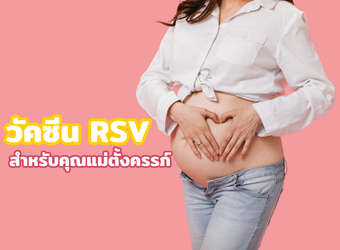
RSV vaccines are now available for pregnant women, and monoclonal antibody protection is available for certain high-risk infants to help reduce severe illness.
When Should You See a Doctor?
Take your child to the hospital immediately if they experience:
-
Rapid or labored breathing
-
Chest retractions while breathing
-
Bluish lips or fingertips
-
Extreme fatigue or poor feeding
-
Persistent high fever
-
Severe shortness of breath
Early medical treatment can help reduce the risk of serious complications.

















 Hospital Articles