Child Snoring: More Serious Than You Think!
(Pediatrics Center) article author : Pornpan Kasisareewong, M.D. 2026-07-07 08:55:00
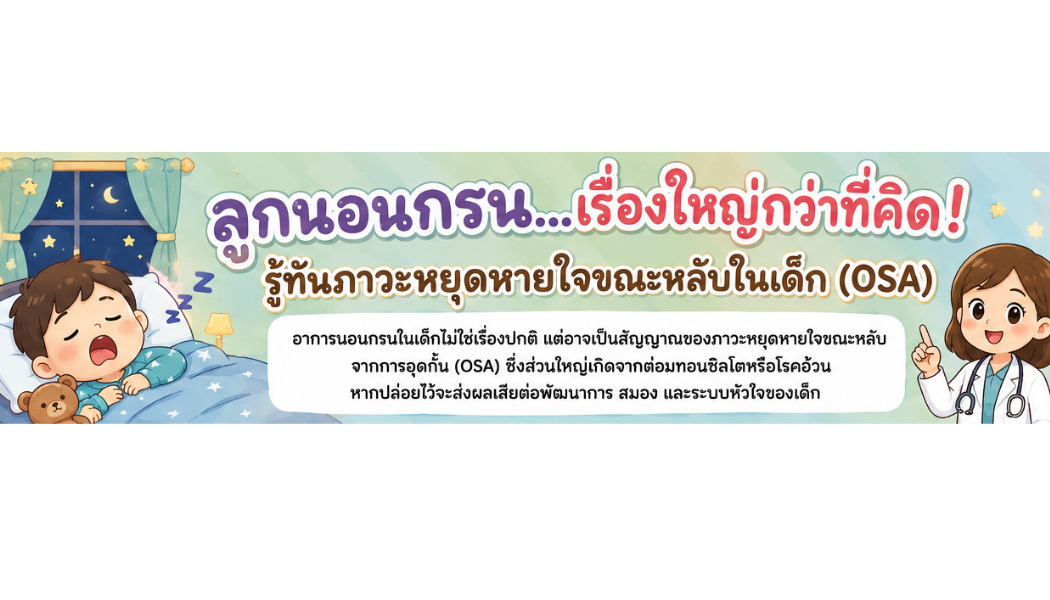
Key Highlights
- Children who snore more than three nights a week should not be overlooked.
- Obstructive Sleep Apnea (OSA) can cause difficulty breathing or repeated pauses in breathing during sleep, reducing the body's oxygen supply.
- Untreated OSA may affect a child's growth, brain development, concentration, learning ability, and overall development.
- The most common causes include enlarged tonsils, enlarged adenoids, and childhood obesity.
- Polysomnography (PSG), or an overnight sleep study, is the gold standard for diagnosing OSA.
- Appropriate treatment—such as medication, surgery, weight management, or other supportive therapies—can help restore healthy sleep and improve a child's overall quality of life.
Child Snoring: More Serious Than You Think!
Understanding Obstructive Sleep Apnea (OSA) in Children
Is Snoring in Children Normal?
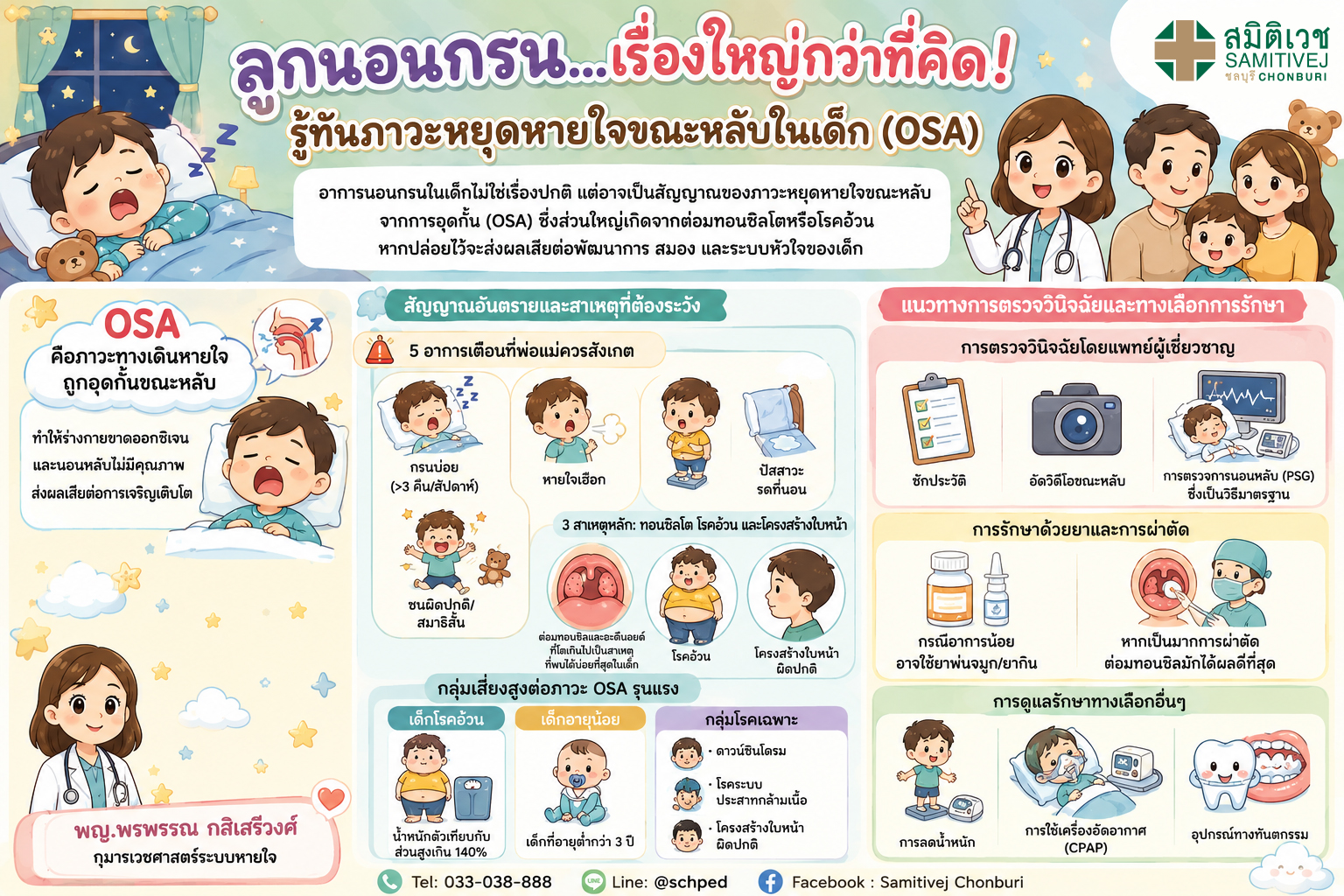
Many parents believe that snoring in children is harmless. However, frequent snoring may be a warning sign of Obstructive Sleep Apnea (OSA), a condition in which the airway becomes partially or completely blocked during sleep.
The most common causes of OSA in children include enlarged tonsils and adenoids or childhood obesity.
If left untreated, OSA can negatively affect a child's growth, learning ability, brain development, and cardiovascular health.
What is Obstructive Sleep Apnea (OSA)?
Obstructive Sleep Apnea (OSA) is a sleep disorder in which the airway becomes blocked during sleep, causing difficulty breathing or repeated pauses in breathing.
As a result, oxygen levels in the blood decrease, leading to poor-quality sleep.
Over time, untreated OSA may cause:
✔ Reduced oxygen supply to the body
✔ Poor-quality, non-restorative sleep
✔ Delayed physical growth
✔ Impaired brain development and learning ability
✔ Increased risk of heart disease and high blood pressure later in life
5 Warning Signs Parents Should Watch For
If your child experiences any of the following symptoms, consult a pediatric specialist.
1. Frequent Snoring
Snoring more than three nights per week.
2. Gasping or Pauses in Breathing During Sleep
Your child may gasp, choke, or temporarily stop breathing while sleeping.
3. Bedwetting
Persistent bedwetting despite being old enough for bladder control.
4. Hyperactivity or Poor Concentration
Children with poor sleep often appear unusually active or have difficulty concentrating rather than looking sleepy.
5. Poor Sleep Quality
- Frequent awakenings
- Restless sleep
- Not feeling refreshed after sleep
Common Causes of OSA in Children
Several factors can contribute to pediatric OSA.
Enlarged Tonsils and Adenoids
This is the most common cause of OSA in children. Enlarged tissues block the airway during sleep.
Obesity
Excess fat around the neck narrows the airway and increases the risk of obstruction.
Abnormal Facial Structure
Examples include:
- Small jaw (micrognathia)
- Craniofacial abnormalities that narrow the airway
Which Children Are at Higher Risk?
The following groups are more likely to develop severe OSA:
Children with Obesity
Weight greater than 140% of the standard weight-for-height.
Young Children
Especially those under 3 years of age.
Children with Certain Medical Conditions
- Down syndrome
- Neuromuscular disorders
- Craniofacial abnormalities
Diagnosis
If OSA is suspected, your doctor may recommend:
- Medical history and symptom assessment
- Video recording of your child's sleep
- Polysomnography (PSG), the gold standard sleep study for diagnosing obstructive sleep apnea
Treatment Options
Treatment depends on the underlying cause and the severity of the condition.
1. Medication
For mild cases, your doctor may prescribe:
- Nasal steroid spray
- Oral medications
2. Surgery
If enlarged tonsils or adenoids are causing airway obstruction, tonsillectomy and adenoidectomy are often the most effective treatment.
3. Additional Treatment Options
Depending on the child's condition, treatment may also include:
- Weight management
- Continuous Positive Airway Pressure (CPAP) therapy
- Dental or oral appliances
When Should You See a Doctor?
Seek medical evaluation if your child:
- Snores regularly
- Has pauses in breathing during sleep
- Gasps for air while sleeping
- Appears excessively sleepy during the day
- Has hyperactivity or difficulty concentrating
- Continues to wet the bed together with habitual snoring
Early diagnosis and treatment can significantly reduce the risk of long-term complications affecting growth, development, and overall health.
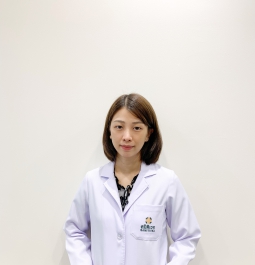
Pediatric Respiratory Specialist
Dr. Pornpan Kilisrueangsri
Pediatric Pulmonology
Contact Us
Department of Pediatric Pulmonology
Tel: +66 33 038 888
LINE: @schped
Facebook: Samitivej Chonburi
Frequently Asked Questions (FAQ)
Is it normal for my child to snore regularly?
Occasional snoring may not be a concern, but if your child snores more than three nights per week, or experiences gasping, pauses in breathing, or restless sleep, it could be a sign of Obstructive Sleep Apnea (OSA). A medical evaluation by a pediatric specialist is recommended.
What are the warning signs of Obstructive Sleep Apnea (OSA) in children?
- Frequent snoring
- Gasping or pauses in breathing during sleep
- Restless or poor-quality sleep
- Hyperactivity or difficulty concentrating
- Bedwetting associated with habitual snoring
What causes OSA in children?
- Enlarged tonsils
- Enlarged adenoids
- Childhood obesity
- Abnormal facial or airway structure
Can Obstructive Sleep Apnea (OSA) be treated?
Yes. Treatment depends on the underlying cause and severity of the condition. Options may include medications, tonsil and adenoid surgery, weight management, Continuous Positive Airway Pressure (CPAP) therapy, or other supportive treatments recommended by your physician.
What happens if OSA is left untreated?
Untreated OSA may affect a child's growth, brain development, learning ability, concentration, sleep quality, and overall quality of life. It may also increase the risk of cardiovascular problems later in life.




































 Hospital Articles