Common Misconceptions About Goat Milk and Cow’s Milk
(Pediatrics Center) article author : On-anong Nilwalaikul, M.D. 2026-06-17 15:44:00
HIGHLIGHTS :
- Goat milk is not a suitable alternative for children with cow’s milk allergy, as the proteins are 80–90% similar.
- Approximately 90–95% of children with cow’s milk allergy may also react to goat milk due to cross-reactivity.
- Goat milk may worsen symptoms and increase the risk of severe allergic reactions.
- Current guidelines recommend Extensively Hydrolyzed Formula (eHF) as the first-line nutritional option for cow’s milk allergy.
- Children with severe symptoms may require Amino Acid Formula (AAF) under medical supervision.
- Early diagnosis and proper management of cow’s milk allergy in children support healthy growth and reduce the risk of future allergic diseases.
Common Misconceptions About Goat Milk and Cow’s Milk
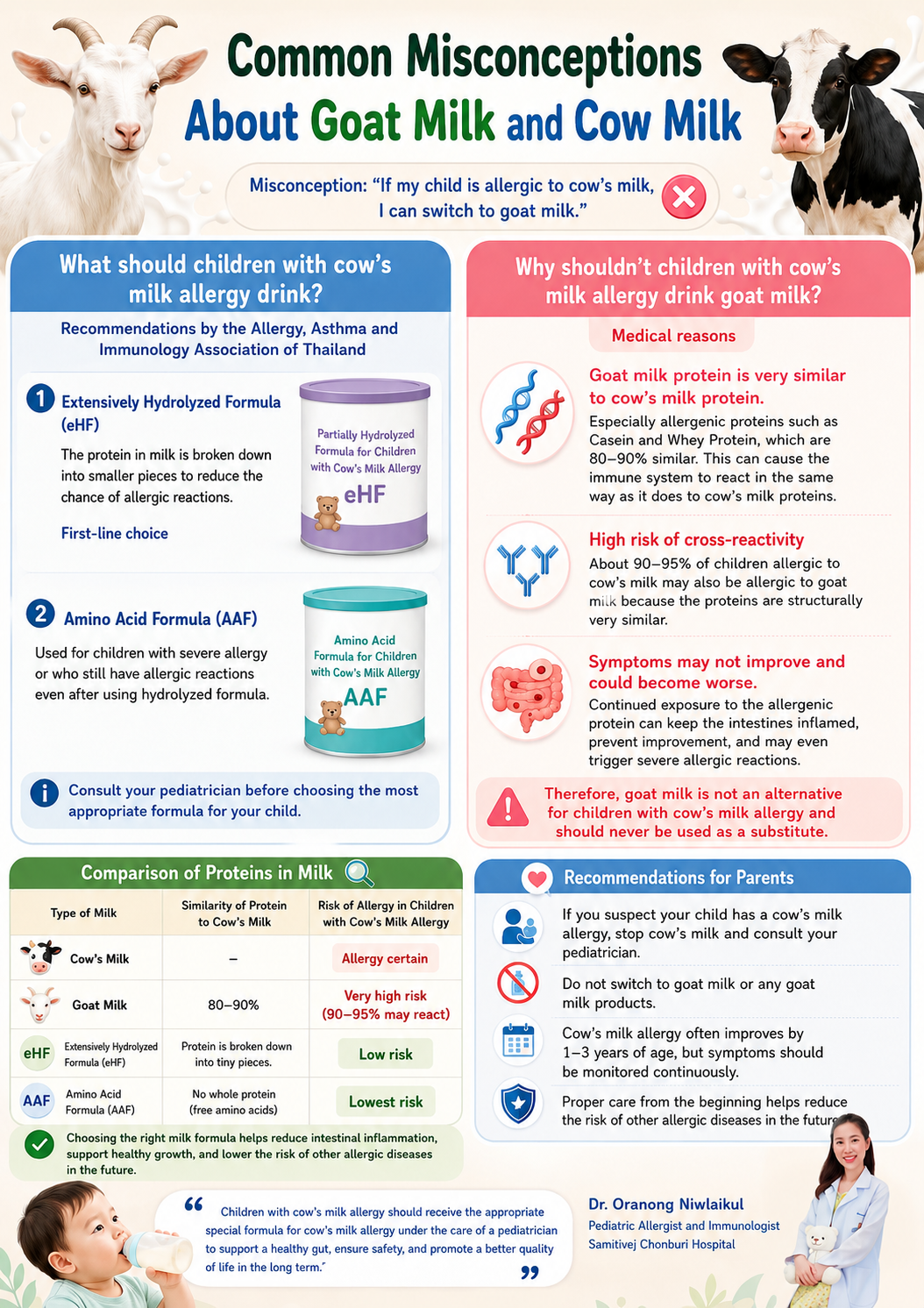
Myth: “If a child is allergic to cow’s milk, they can switch to goat’s milk.” ❌
What Should Children with Cow’s Milk Allergy Drink?
According to recommendations from the Allergy, Asthma and Immunology Association of Thailand:
1. Extensively Hydrolyzed Formula (eHF)
The proteins in the formula are broken down into much smaller components to reduce the risk of triggering allergic reactions.
This is the first-line recommended option.
2. Amino Acid Formula (AAF)
Recommended for children with severe cow’s milk allergy or for those who continue to have allergic reactions despite using extensively hydrolyzed formula.
Parents should consult a pediatrician before choosing the most appropriate formula for their child.
Why Should Children with Cow’s Milk Allergy Avoid Goat’s Milk?
Medical Reasons
Goat Milk Proteins Are Very Similar to Cow’s Milk Proteins
The main allergenic proteins, including casein and whey protein, share approximately 80–90% similarity with those found in cow’s milk. As a result, the immune system may react to goat milk proteins in the same way it reacts to cow’s milk proteins.
Risk of Cross-Reactivity
Approximately 90–95% of children with cow’s milk allergy may also react to goat’s milk because the protein structures are highly similar.
Symptoms May Persist or Become Worse
Continued exposure to proteins that trigger allergic reactions can keep the intestines inflamed, prevent symptom improvement, and may even lead to more severe allergic reactions.
⚠️ Therefore, goat’s milk is not an appropriate alternative for children with cow’s milk allergy and should not be used as a substitute.
Comparison of Milk Proteins
| Type of Milk | Protein Similarity to Cow’s Milk | Risk of Allergy in Children with Cow’s Milk Allergy |
|---|---|---|
| Cow’s Milk | – | Certain allergic reaction |
| Goat’s Milk | 80–90% | Very high risk (90–95% may react) |
| Extensively Hydrolyzed Formula (eHF) | Proteins are broken down into very small fragments | Very low risk |
| Amino Acid Formula (AAF) | Contains no intact protein molecules (free amino acids only) | Lowest risk |
✅ Choosing the right formula can help reduce intestinal inflammation, support healthy growth, and lower the risk of developing other allergic diseases in the future.
Recommendations for Parents
- If you suspect your child has a cow’s milk allergy, stop giving cow’s milk and consult a pediatrician.
- Do not switch to goat’s milk or goat milk products.
- Cow’s milk allergy often improves between 1–3 years of age, but ongoing monitoring is important.
- Early and appropriate management can help reduce the risk of other allergic conditions later in life.
“Children with cow’s milk allergy should receive an appropriate hypoallergenic formula under the supervision of a pediatrician to ensure healthy growth, safety, and a better quality of life in the long term.”

Dr. Oranong Niwlaikul
Pediatric Allergist and Immunologist
Samitivej Chonburi Hospital




































 Hospital Articles