A Parent’s Guide: Understanding the Influenza Vaccine
(Pediatrics Center) article author : Wankwan Ak-kayakul, M.D. 2026-06-17 08:36:00
HIGHLIGHTS :
-
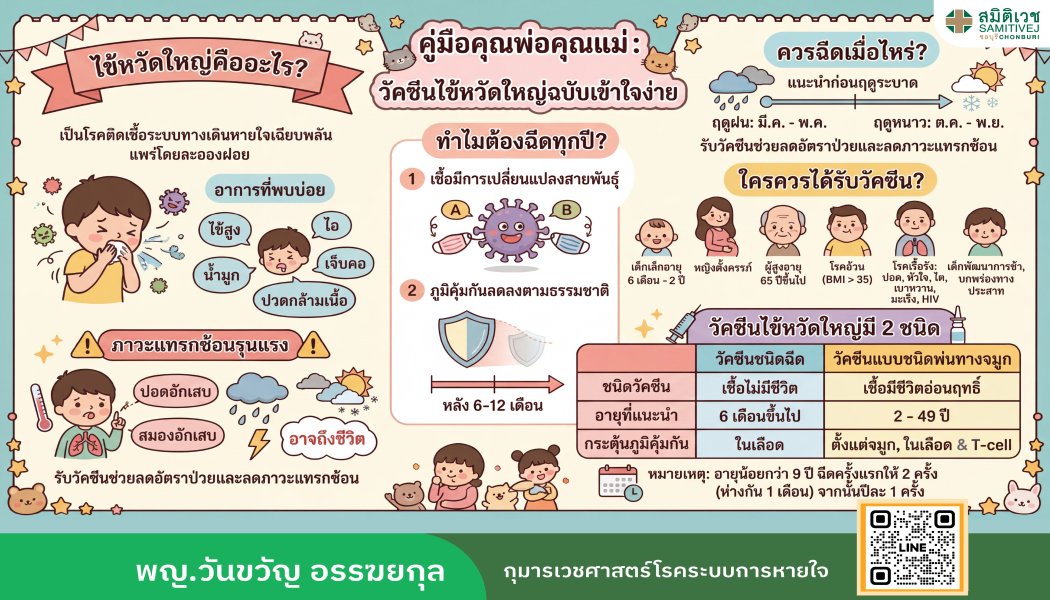
Influenza is a contagious respiratory infection that can cause serious complications such as pneumonia and encephalitis.
-
Annual vaccination is recommended because flu viruses change over time and immunity decreases after 6–12 months.
-
The best time to get vaccinated is before the flu season, typically during March–May and October–November.
-
High-risk groups include young children, pregnant women, older adults, people with obesity, chronic diseases, and children with developmental or neurological disorders.
-
Two vaccine options are available: injectable (inactivated) and intranasal (live attenuated) vaccines.
-
Children under 9 years old receiving their first flu vaccine need two doses, one month apart, followed by annual vaccination.
A Parent’s Guide: Understanding the Influenza Vaccine
What is Influenza?
Influenza (flu) is an acute respiratory infection transmitted through respiratory droplets.
Common Symptoms
- → High fever
- → Runny nose
- → Cough
- → Sore throat
- → Muscle aches
Serious Complications
- Pneumonia
- Encephalitis (brain inflammation)
- In severe cases, it can be life-threatening
Influenza vaccination helps reduce the risk of illness and serious complications.
Why Is Annual Vaccination Recommended?
1. Influenza viruses constantly change their strains.
2. Immunity naturally declines over time.
Protection gradually decreases after 6–12 months.
When Should You Get Vaccinated?
Vaccination is recommended before the flu season begins.
- Rainy season: March – May
- Cool season: October – November
Getting vaccinated helps reduce both infection rates and complications.
Who Should Receive the Influenza Vaccine?
- ✅Children aged 6 months to 2 years
- ✅Pregnant women
- ✅Adults aged 65 years and older
- ✅Individuals with obesity (BMI > 35)
- ✅People with chronic diseases, including:
- Lung disease
- Heart disease
- Kidney disease
- Diabetes
- Cancer
- HIV infection
- Children with developmental delays or neurological disorders
Types of Influenza Vaccines
| Category | Injectable Influenza Vaccine | Intranasal Influenza Vaccine |
|---|---|---|
| Vaccine Type | Inactivated vaccine | Live attenuated vaccine |
| Recommended Age | 6 months and older | 2–49 years |
| Immune Response | Stimulates systemic immunity in the bloodstream | Stimulates immunity in the nasal mucosa, bloodstream, and T-cell response |
Note
Children under 9 years of age receiving the influenza vaccine for the first time should receive 2 doses, administered 1 month apart, followed by annual vaccination (once a year).





































 Hospital Articles