Iron Deficiency Anemia in Children
(Pediatrics Center) article author : Benjamas Tanyong, M.D. 2026-07-08 08:49:00
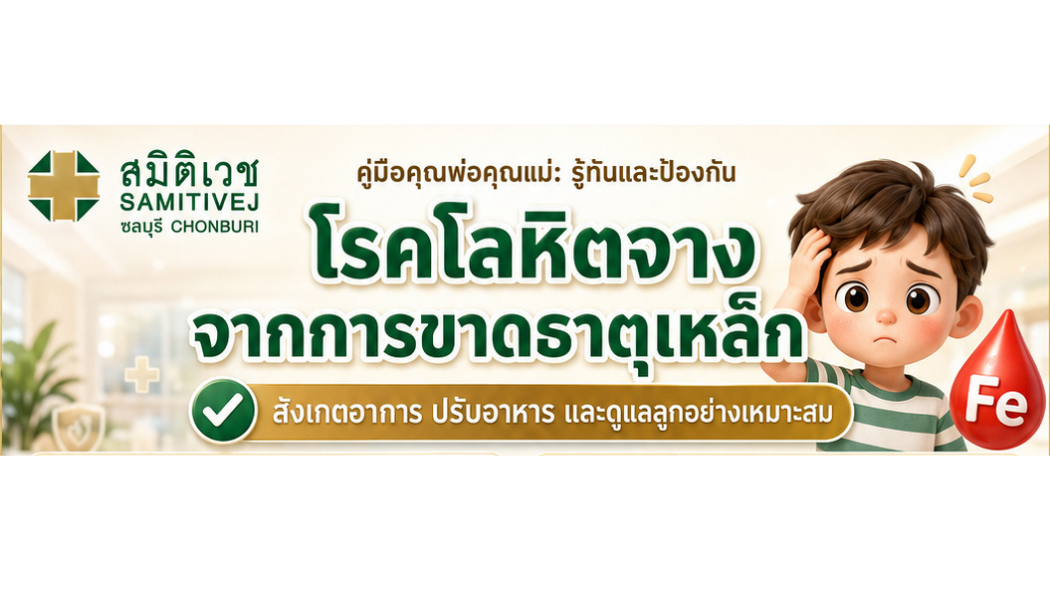
HIGHLIGHTS
- Recognize the early warning signs: Pale skin, fatigue, easy tiredness, poor concentration, or dizziness may be signs of iron deficiency anemia in children.
- Include iron-rich foods in your child's diet: Encourage foods such as red meat, liver, egg yolks, seafood, green leafy vegetables, and legumes to support healthy red blood cell production.
- Vitamin C enhances iron absorption: Pair iron-rich foods with vitamin C-rich fruits such as oranges, guava, kiwi, or strawberries to improve iron absorption.
- Some children are at higher risk: This includes infants over 6 months of age who are exclusively breastfed without adequate complementary foods, premature babies, and children with low birth weight.
- Don't delay medical evaluation if you are concerned: If your child is suspected of having iron deficiency anemia, consult a pediatrician promptly for a physical examination and blood tests. Treatment may include iron supplementation along with dietary modifications as recommended by your doctor.
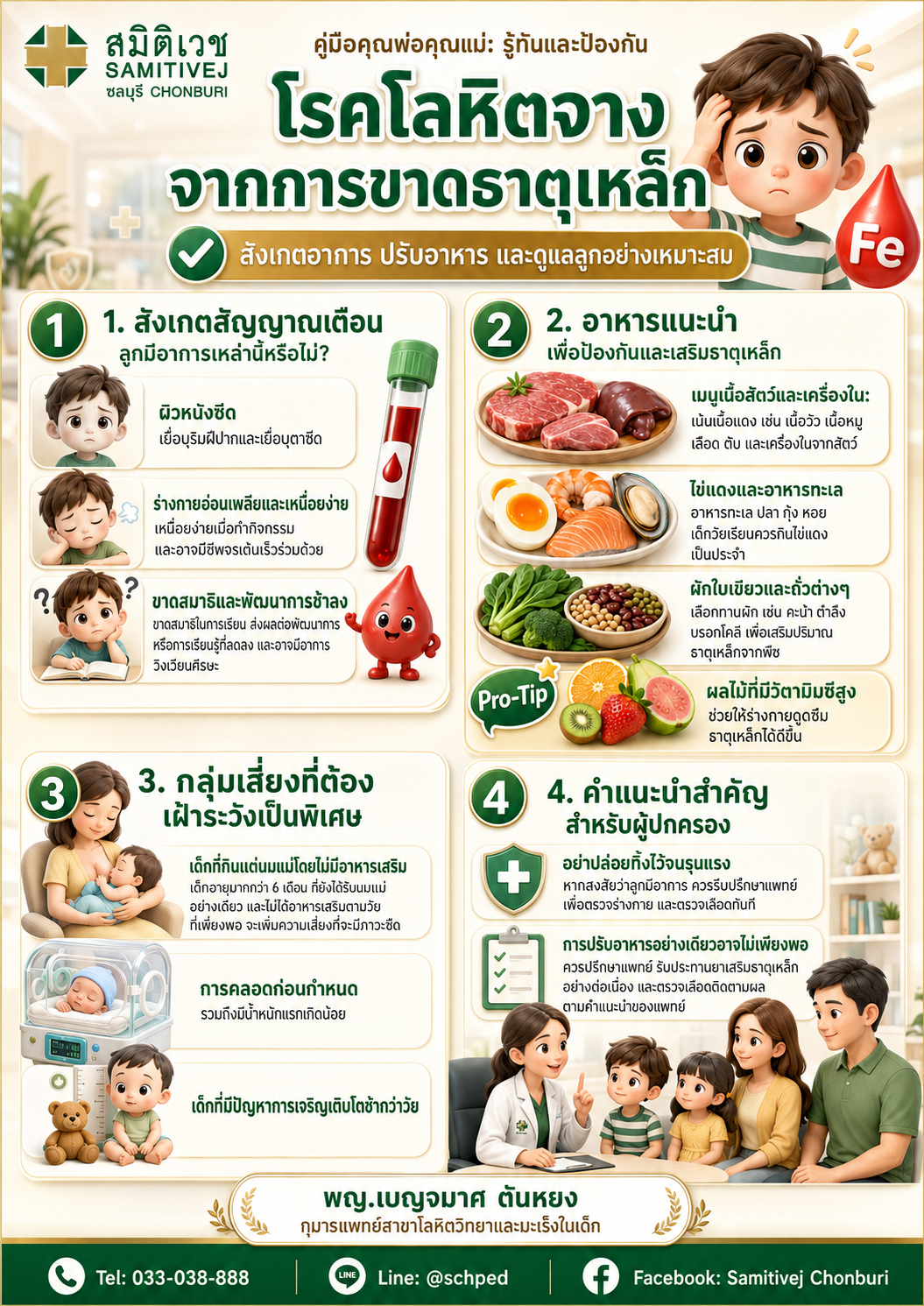
Iron Deficiency Anemia in Children
Iron deficiency anemia is one of the most common nutritional disorders in children. If left untreated, it may affect growth, cognitive development, learning ability, and overall health.
1. Warning Signs
Does your child have any of these symptoms?
- Pale skin
- Pale lips and pale conjunctiva (inside the lower eyelids)
- Fatigue and low energy
- Gets tired easily during physical activities, sometimes accompanied by a rapid heartbeat
- Spoon-shaped or brittle nails
- Cracks at the corners of the mouth or a smooth, sore tongue
- Poor concentration and delayed development
- Difficulty concentrating at school
- Poor learning performance and dizziness
Important: If your child has several of these symptoms, consult a pediatrician for further evaluation.
2. Recommended Foods
Foods Rich in Iron
A. Red Meat and Organ Meats
Choose foods that are naturally high in iron, such as:
- Beef
- Pork
- Liver
- Blood products
- Other organ meats
B. Egg Yolks and Seafood
Good dietary sources of iron include:
- Egg yolks
- Fish
- Shrimp
- Shellfish
School-aged children should consume egg yolks regularly as part of a balanced diet.
C. Green Leafy Vegetables and Legumes
Plant-based sources of iron include:
- Chinese kale
- Ivy gourd leaves
- Broccoli
- Beans and legumes
Pro Tip
Eating foods rich in vitamin C, such as oranges, guava, kiwi, or strawberries, helps the body absorb iron more effectively.
3. Children at Higher Risk
Infants Exclusively Breastfed Without Adequate Complementary Foods
Infants older than 6 months who are exclusively breastfed without receiving appropriate complementary foods are at increased risk of developing iron deficiency anemia.
Premature and Low Birth Weight Infants
Children born prematurely, with low birth weight, or those experiencing delayed growth require closer monitoring for iron deficiency.
4. Important Advice for Parents
Don't Wait Until Symptoms Become Severe
If you suspect your child may have iron deficiency anemia, consult a pediatrician promptly for a physical examination and blood tests.
Diet Alone May Not Be Enough
Depending on the severity of the condition, treatment may include:
- Medical evaluation by a pediatrician
- Iron supplementation as prescribed
- Regular blood tests to monitor treatment response
Always follow your doctor's instructions and complete the prescribed course of treatment.
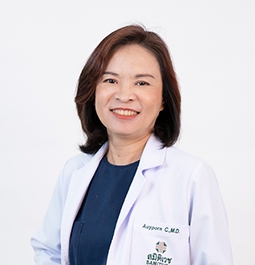
Pediatric Hematology & Oncology Specialist
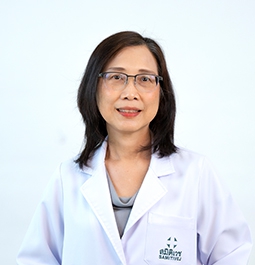
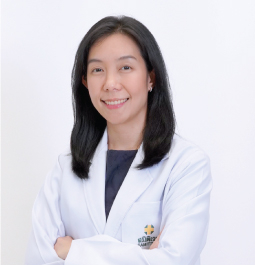
Dr. Benjamas Tonyong, M.D.
Pediatric Hematology and Oncology Specialist
Tel: +66 33 038 888
LINE: @schped
Facebook: Samitivej Chonburi
Frequently Asked Questions (FAQ)
When should I take my child to see a doctor?
If your child has pale skin, fatigue, gets tired easily, or has difficulty concentrating, you should consult a pediatrician promptly for a physical examination and blood tests. Do not wait until the symptoms become more severe.
How can I improve my child's iron absorption?
Serve iron-rich foods together with fruits high in vitamin C, such as oranges, guava, kiwi, or strawberries. Vitamin C helps the body absorb iron more efficiently.
Did you know? How does iron deficiency affect children?
Iron deficiency can affect a child's growth, cognitive development, concentration, and learning ability—even before obvious signs of anemia appear. Early recognition and regular health check-ups are important for timely diagnosis and treatment.











 Hospital Articles