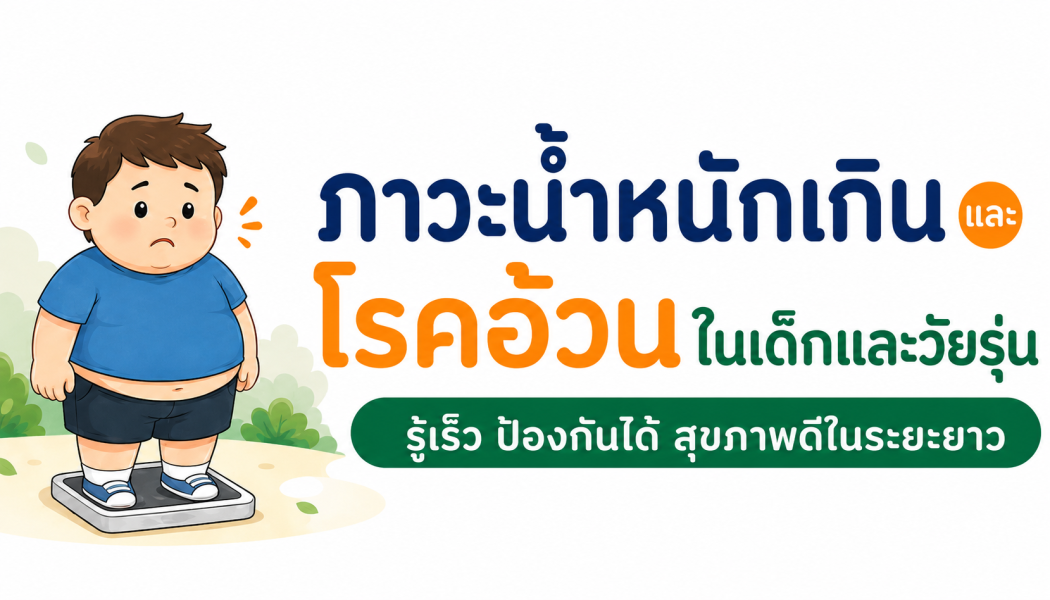
ภาวะน้ำหนักเกิน และโรคอ้วนในเด็กและวัยรุ่น
(Pediatrics Center) article author : Pucharawan Chuenrattanawong, M.D. 2026-07-21 16:45:00
KEY HIGHLIGHTS
- Childhood overweight and obesity increase the risk of chronic diseases, including Type 2 diabetes, high blood pressure, fatty liver disease, heart disease, and sleep apnea if left untreated.
- Early recognition and regular growth monitoring help identify children at risk, allowing timely intervention and reducing obesity-related complications.
- Prevent childhood obesity by encouraging a balanced diet, reducing sugary drinks, processed foods, and fast food, while increasing fruits and vegetables at every meal.
- Promote at least 60 minutes of physical activity daily and limit recreational screen time to support healthy weight management and overall child development.
- Parents play a vital role by modeling healthy eating habits, active lifestyles, and positive family routines that encourage lifelong healthy behaviors.
- Consult a pediatrician if your child is overweight or gaining weight rapidly for personalized assessment, treatment, and long-term prevention of obesity-related non-communicable diseases (NCDs).
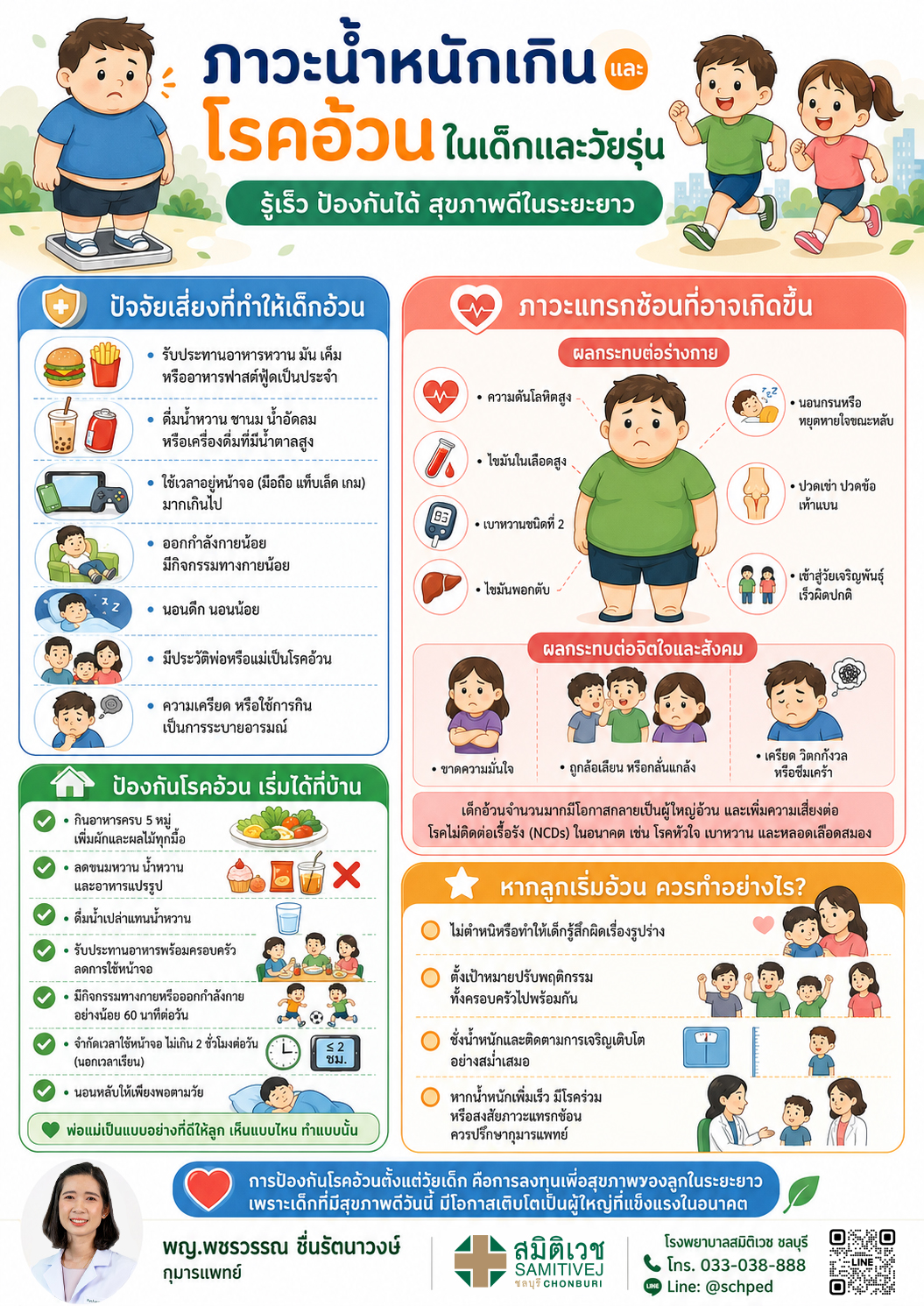
Overweight and Obesity in Children and Adolescents
Early Awareness, Better Prevention, Healthier Future
Risk Factors for Childhood Obesity
- Regularly eating foods high in sugar, fat, and salt, or consuming fast food.
- Frequently drinking sugary beverages such as sweetened tea, soft drinks, and bubble tea.
- Spending excessive time on screens (mobile phones, tablets, video games).
- Lack of physical activity or regular exercise.
- Staying up late or not getting enough sleep.
- Having a family history of obesity (parents with obesity).
- Emotional stress or using food as a way to cope with emotions.
Possible Health Complications
Physical Health Effects
- High blood pressure
- High blood cholesterol
- Type 2 diabetes
- Fatty liver disease
- Snoring or obstructive sleep apnea
- Knee pain, joint pain, and flat feet
- Early onset of puberty
Emotional and Social Effects
- Low self-esteem
- Being teased or bullied
- Stress, anxiety, or depression
Children with obesity are more likely to become adults with obesity, increasing their risk of developing non-communicable diseases (NCDs) later in life, such as heart disease, diabetes, and stroke.
Preventing Childhood Obesity Starts at Home
- Eat a balanced diet with all five food groups and include fruits and vegetables at every meal.
- Limit sweets, sugary drinks, and processed foods.
- Choose plain water instead of sugary beverages.
- Enjoy family meals together and reduce screen time during meals.
- Encourage at least 60 minutes of physical activity every day.
- Limit recreational screen time to no more than 2 hours per day (excluding school-related activities).
- Ensure children get enough sleep appropriate for their age.
Parents are powerful role models—children learn by watching what you do.
What Should You Do If Your Child Is Becoming Overweight?
- Avoid blaming or making your child feel guilty about their body size.
- Set healthy lifestyle goals and make changes together as a family.
- Monitor your child's weight and growth regularly.
- If your child gains weight rapidly, has underlying health conditions, or shows signs of obesity-related complications, consult a pediatrician.
Key Takeaway
Preventing obesity from childhood is a long-term investment in your child's health. Healthy children today are more likely to become healthy, strong adults in the future.
Dr. Patcharawan Chuenrattanawong, M.D.
Pediatrician
Samitivej Chonburi Hospital
Tel: +66 33 038 888
LINE Official Account: @schped




































 Hospital Articles