Advice for Parents of Children with Food Allergies
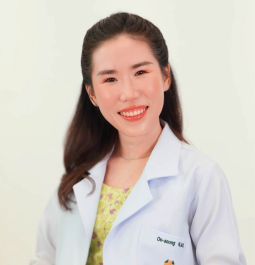
(Pediatrics Center) article author : Aree Saengsiriwut, M.D. 2026-07-22 10:56:00
HIGHLIGHTS :
- Recognize the signs of food allergies in children, such as hives, swollen lips, vomiting, and difficulty breathing. Symptoms may appear within 2 hours after eating.
- Manage your child's food allergy safely by reading food labels carefully, avoiding allergenic foods, and preventing cross-contamination during food preparation.
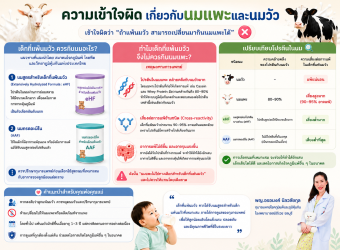
- Common food allergens in children include cow's milk, eggs, peanuts, tree nuts, soy, wheat, fish, and shellfish.
- If your child develops a severe allergic reaction, use an Epinephrine Auto-Injector (if prescribed by your doctor) and seek emergency medical care immediately.
- Some children outgrow food allergies as they get older. Regular follow-up with a pediatrician is important to monitor their condition and reassess food allergies over time.
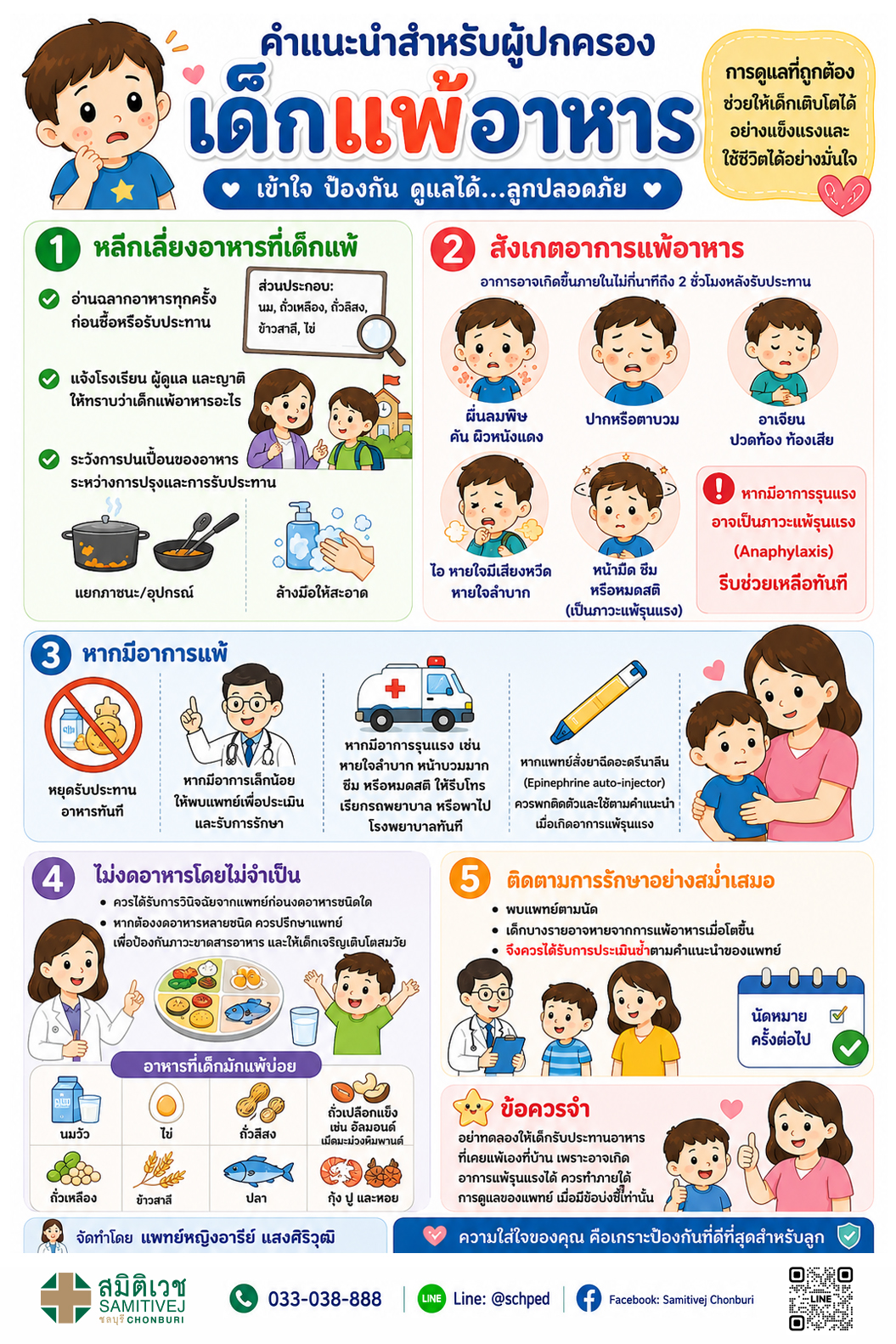
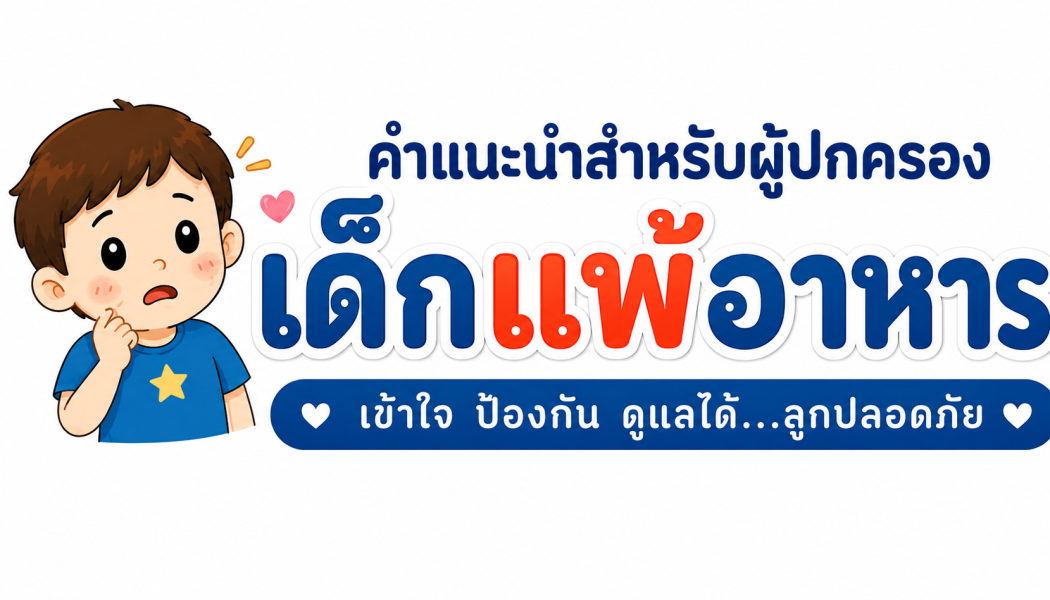
Advice for Parents of Children with Food Allergies
 Understand, Prevent, and Manage Food Allergies… Keep Your Child Safe
Proper care helps children grow up healthy, confident, and able to enjoy daily life safely.
Avoid Foods That Trigger Allergies
- Avoid all foods your child is allergic to.
- Always read food labels carefully before buying or eating.
- Inform teachers, caregivers, and family members about your child's food allergies.
- Prevent cross-contamination during food preparation and meals.
Common Ingredients to Watch For
- Milk
- Soy
- Peanuts
- Wheat
- Eggs
Helpful Tips
- Use separate utensils and food containers.
- Wash hands thoroughly before handling food.
- Monitor your child for signs of an allergic reaction.
Food Allergy Symptoms
Symptoms may occur within a few minutes to up to 2 hours after eating.
Common symptoms include:
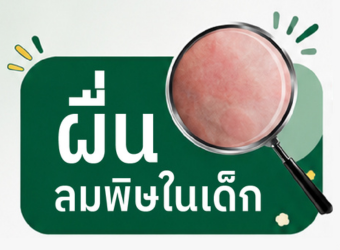
- Hives, itching, or skin redness
- Swelling of the lips, mouth, or chin
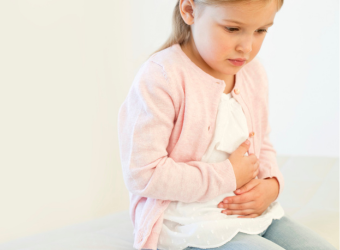
- Vomiting, stomach pain, or diarrhea
- Coughing, wheezing, or difficulty breathing
- Dizziness, drowsiness, or loss of consciousness (signs of a severe allergic reaction)
⚠️ Severe symptoms may indicate Anaphylaxis—a life-threatening allergic reaction that requires immediate emergency treatment.
What to Do If an Allergic Reaction Occurs
- Stop eating the suspected food immediately.
- For mild symptoms, see a doctor promptly for evaluation and treatment.
- For severe symptoms such as difficulty breathing, significant facial swelling, drowsiness, or unconsciousness, call emergency medical services or go to the nearest hospital immediately.
- If your child has been prescribed an Epinephrine Auto-Injector, always carry it and use it as instructed when a severe allergic reaction occurs.
Do Not Eliminate Foods Unnecessarily
- Avoid eliminating foods without a doctor's diagnosis.
- If multiple foods must be avoided, consult a pediatrician or dietitian to prevent nutritional deficiencies and ensure healthy growth.
Common Food Allergens in Children
- Cow's milk
- Eggs
- Peanuts
- Tree nuts (such as almonds and macadamia nuts)
- Soy
- Wheat
- Fish
- Shellfish (shrimp, crab, and mollusks)
Follow Up Regularly
- Attend all scheduled medical appointments.
- Some children outgrow food allergies as they get older.
- Regular reassessment by a healthcare professional is recommended.
Important Reminder
Do not reintroduce foods that previously caused an allergic reaction at home. Doing so may trigger a severe allergic reaction. Food reintroduction should only be performed under medical supervision when recommended by a physician.
Medical Information Provided by
Dr. Aree Saengsiriwut, M.D.
Samitivej Chonburi Hospital
☎️ Tel: +66 33 038 888
LINE: @schped
Facebook: Samitivej Chonburi









 Hospital Articles