
General Package
6 packages-
 WHOOP ADVANCED LABS9,990 THB / setThis price includes medical professional fees and hospital service fee.
 -
 LASIK35,000 THB / setThis price includes medical professional fees and hospital service fee.
 -
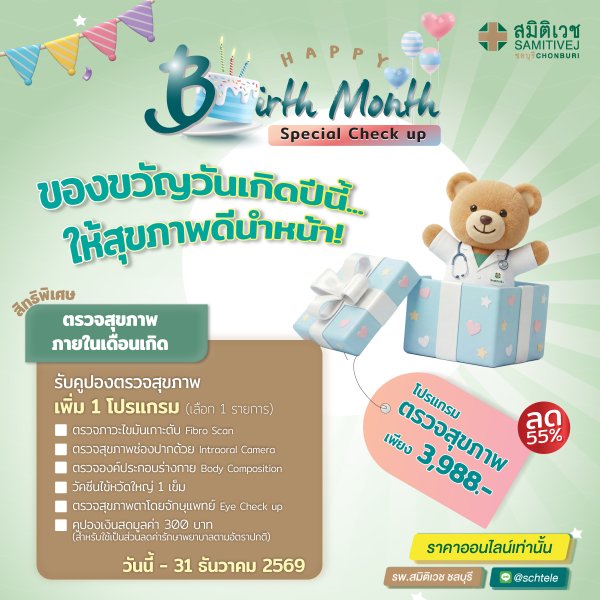 Happy Birth Month Check Up 13,988 THB / setNormal Price
9,000 THB -
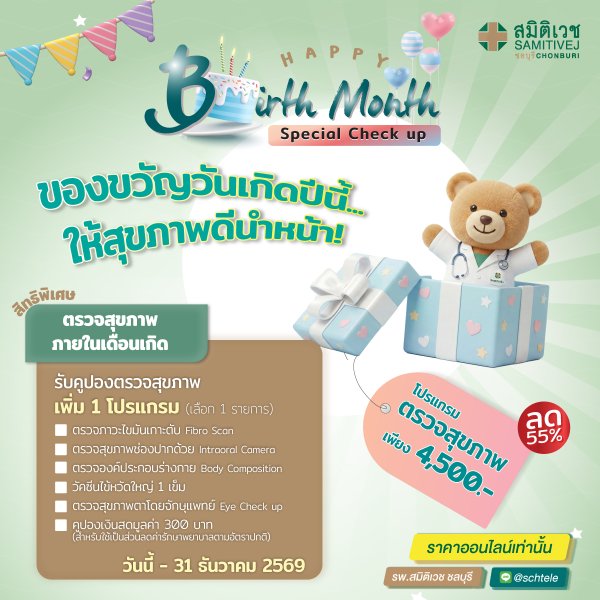 Happy Birth Month Check Up 24,500 THB / setNormal Price
9,907 THB -
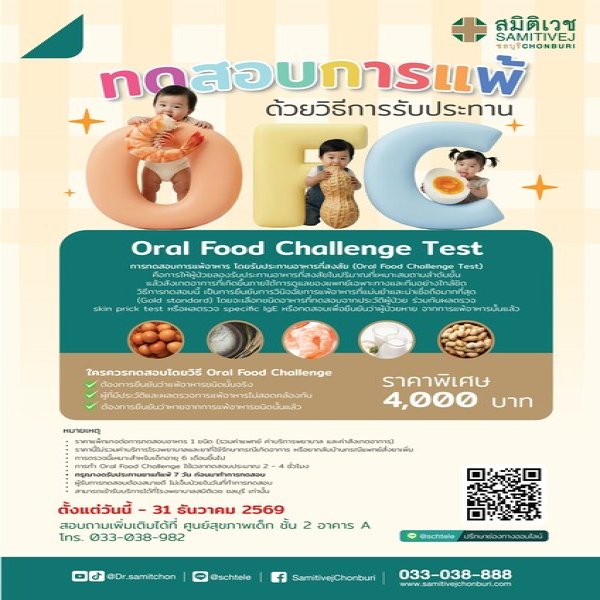 Oral Food Challenge Price 4,000 Bath.4,000 THB / setThis price includes medical professional fees and hospital service fee.
 -
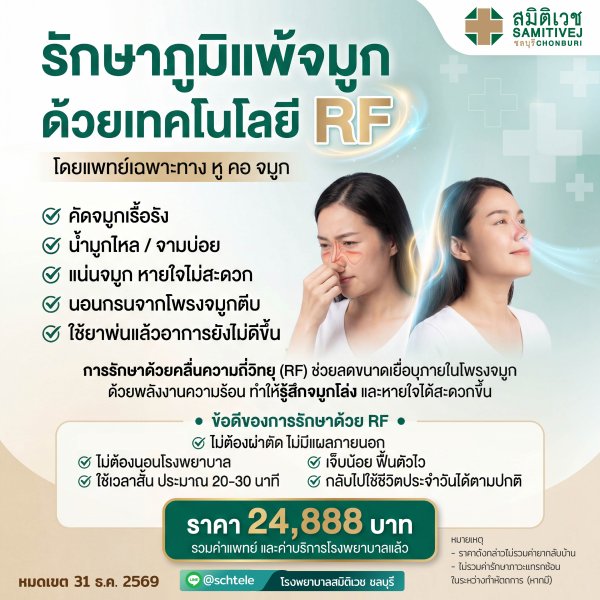 Radiofrequency Program24,888 THB / setThis price includes medical professional fees and hospital service fee.
 Hospital Articles
View All
Endoscopic Thyroid Surgery with No Neck Scar (TOETVA): What Is It and Who Is It For?
Highlight: Endoscopic Thyroid Surgery with No Neck Scar (TOETVA): What Is It and Who Is It For?
Endoscopic thyroid surgery (TOETVA) through the mouth, with no scar on the neck
Transoral thyroid surgery: the scope is inserted through the inside of the lower lip, so there is no need to cut the skin of the neck
Who is suitable: a non-cancerous thyroid nodule no larger than 4 cm, or thyroid cancer that has not spread
Additional criteria: no previous surgery or radiation to the neck and chin, including hyperthyroidism that has not responded to medication
Fast recovery: go home within 24-48 hours and return to daily activities within 1-2 weeks
Thyroid surgery in Chonburi: assessed individually by a head and neck specialist at Samitivej Chonburi Hospital
Read more




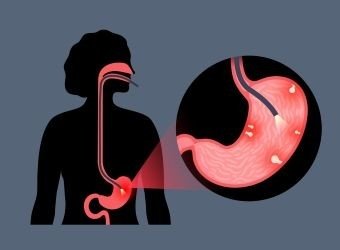


Warning Signs of Osteoporosis
Learn the early warning signs of osteoporosis, what causes bone loss, and when to see a bone specialist at Samitivej Chonburi Hospital about your risk.
Read more

HPH Newsletter · August 2026
“Taking care of your health doesn’t have to start with big changes.”
Simply making small, consistent adjustments to your daily habits can help build better health for the long term.
5 Simple Ways to Take Better Care of Yourself
Read more

HPH Newsletter – July 2026
- Recognize Stress and Its Warning Signs — Understand the physical, emotional, cognitive, and behavioral signs of stress, helping healthcare professionals recognize and take care of their mental well-being at an early stage.
-5 Ways to Support Mental Well-Being at Work — From taking short breaks and practicing slow breathing to maintaining a balanced diet, exercising, getting enough sleep, and talking with someone you trust.
-Caring for the Caregivers — Good physical and mental well-being among healthcare professionals is an important foundation for creating a Healthy Workplace and providing quality patient care.
-You Don't Have to Face Stress Alone — If ongoing stress begins to affect your sleep, daily life, relationships, or work, consider talking with someone you trust and seeking advice from a healthcare professional.
-Healthy Mind → Healthy Staff → Healthy Workplace → Healthy Hospital
Read more
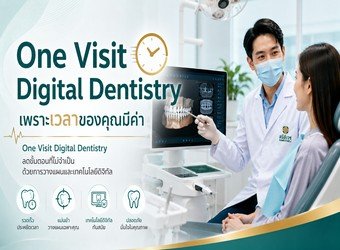
One Visit Digital Dentistry
One Visit Digital Dentistry combines digital technology and coordinated dental care to help reduce unnecessary waiting time and dental visits.
Digital Restoration uses Digital Scanning and Chairside CAD/CAM to provide crowns, inlays, onlays, and selected veneers through a fully digital workflow.
Same-Day Dentistry, when clinically appropriate, may allow the Scan → Design → Fabrication → Delivery process to be completed in a single visit.
Digital Implant Dentistry combines Dental CT, Digital Scanning, and Digital Wax-Up for detailed 3D implant treatment planning.
Immediate Implant Placement and Same-Day Provisional Restoration may be possible when clinical conditions are suitable.
Coordinated Specialist Care brings a multidisciplinary dental team together in one center, helping streamline treatment planning and appointments.
Read more
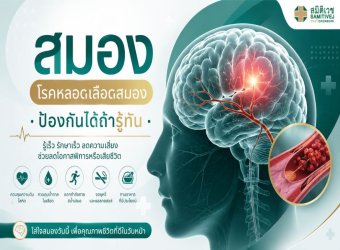

Advice for Parents of Children with Food Allergies
Recognize the signs of food allergies in children, such as hives, swollen lips, vomiting, and difficulty breathing. Symptoms may appear within 2 hours after eating.
Manage your child's food allergy safely by reading food labels carefully, avoiding allergenic foods, and preventing cross-contamination during food preparation.
Common food allergens in children include cow's milk, eggs, peanuts, tree nuts, soy, wheat, fish, and shellfish.
If your child develops a severe allergic reaction, use an Epinephrine Auto-Injector (if prescribed by your doctor) and seek emergency medical care immediately.
Some children outgrow food allergies as they get older. Regular follow-up with a pediatrician is important to monitor their condition and reassess food allergies over time.
Read more
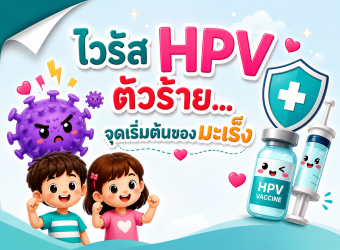
HPV : The Hidden Virus Behind Many Cancers
HPV is a major cause of cervical cancer and several other HPV-related cancers.
HPV vaccination can reduce the risk of cervical cancer by 70–90%, depending on the type of vaccine.
Both girls and boys should receive the HPV vaccine to help prevent HPV infection and related diseases.
Read more
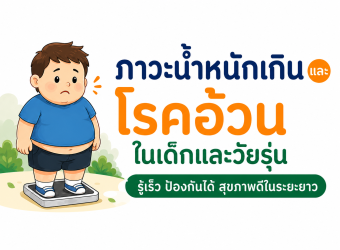
ภาวะน้ำหนักเกิน และโรคอ้วนในเด็กและวัยรุ่น
Overweight and Obesity in Children and Adolescents
Early Awareness, Better Prevention, Healthier Future
Risk Factors for Childhood Obesity
Regularly eating foods high in sugar, fat, and salt, or consuming fast food.
Frequently drinking sugary beverages such as sweetened tea, soft drinks, and bubble tea.
Spending excessive time on screens (mobile phones, tablets, video games).
Lack of physical activity or regular exercise.
Staying up late or not getting enough sleep.
Having a family history of obesity (parents with obesity).
Emotional stress or using food as a way to cope with emotions.
Read more
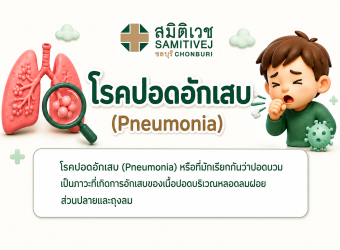
Pneumonia
Pneumonia
Pneumonia is an infection that causes inflammation of the lung tissue, particularly the small airways (bronchioles) and air sacs (alveoli). It is commonly referred to as a lung infection.
Read more
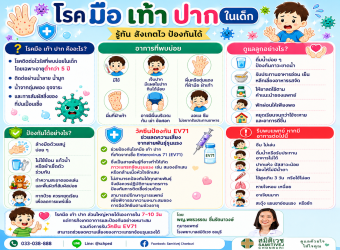
Hand, Foot and Mouth Disease (HFMD) in Children
What is Hand, Foot and Mouth Disease (HFMD)?
Hand, Foot and Mouth Disease (HFMD) is a common viral infection in young children, especially those under 5 years of age.
Read more
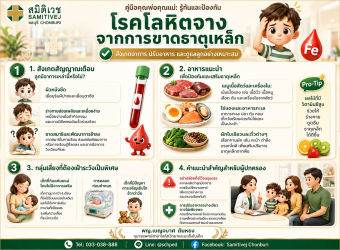
Iron Deficiency Anemia in Children
Recognize the early warning signs: Pale skin, fatigue, easy tiredness, poor concentration, or dizziness may be signs of iron deficiency anemia in children.
Include iron-rich foods in your child's diet: Encourage foods such as red meat, liver, egg yolks, seafood, green leafy vegetables, and legumes to support healthy red blood cell production.
Vitamin C enhances iron absorption: Pair iron-rich foods with vitamin C-rich fruits such as oranges, guava, kiwi, or strawberries to improve iron absorption.
Some children are at higher risk: This includes infants over 6 months of age who are exclusively breastfed without adequate complementary foods, premature babies, and children with low birth weight.
Don't delay medical evaluation if you are concerned: If your child is suspected of having iron deficiency anemia, consult a pediatrician promptly for a physical examination and blood tests. Treatment may include iron supplementation along with dietary modifications as recommended by your doctor.
Read more
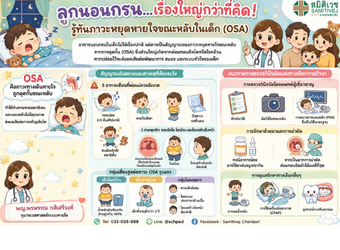
Child Snoring: More Serious Than You Think!
- Children who snore more than three nights a week should not be overlooked.
- Obstructive Sleep Apnea (OSA) can cause difficulty breathing or repeated pauses in breathing during sleep, reducing the body's oxygen supply.
- Untreated OSA may affect a child's growth, brain development, concentration, learning ability, and overall development.
- The most common causes include enlarged tonsils, enlarged adenoids, and childhood obesity.
- Polysomnography (PSG), or an overnight sleep study, is the gold standard for diagnosing OSA.
- Appropriate treatment—such as medication, surgery, weight management, or other supportive therapies—can help restore healthy sleep and improve a child's overall quality of life.
Read more
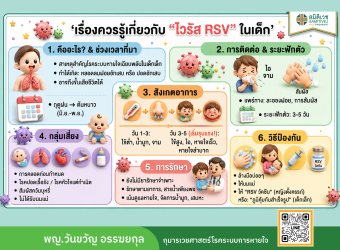
What Parents Should Know About RSV in Children: More Dangerous Than You Think
RSV in Children: Symptoms, Prevention & When to See a Doctor
RSV (Respiratory Syncytial Virus) is a common respiratory virus in infants and young children that can cause severe complications such as bronchiolitis and pneumonia, especially in children under 5 years old.
Common RSV Symptoms in Children
Runny nose
Mild to high fever
Coughing
Sneezing
Wheezing
Rapid breathing
Difficulty breathing
Read more